
Garmin 7 Days Out Nepal:
Behind the Langtang Circuit Docuseries
By Digbijaya Bharati, Founder & Managing Director, Nepal Film Production
Garmin's 7 Days Out brought two everyday adventurers into Nepal for a demanding seven-day journey through the Langtang region, combining documentary storytelling, high-altitude trekking and real-world use of Garmin outdoor technology.
For production teams, the series is also a useful example of what high-altitude filming in Nepal actually involves. A trekking docuseries cannot be managed like a conventional commercial shoot. Every camera, battery, crew member, permit, accommodation stop and transport decision has to move with the production through mountain terrain.
Nepal Film Production supported the Nepal side of the project, helping coordinate the local production requirements needed to operate in Kathmandu and the Langtang region.
What Is Garmin's 7 Days Out?
7 Days Out is an original Garmin docuseries following Wes and Joel as they take on the Langtang Circuit in the Nepal Himalayas.
Garmin equipped them with fēnix 7X Pro smartwatches and other outdoor technology while documenting the physical and personal challenges of the journey.
The seven-part series begins in Kathmandu before moving into the Langtang Valley and eventually toward Kyanjin Ri, where the journey reaches more than 15,000 feet above sea level.
Rather than presenting the products only through specifications, the series puts navigation, altitude acclimation data, heart-rate monitoring, Body Battery data and satellite communication into a real mountain environment.
For filmmakers considering branded docuseries production in Nepal, that combination of product demonstration and human storytelling is what makes the project particularly relevant.
Why Langtang Worked for Garmin's Story
Langtang gives filmmakers an unusual range of environments within one mountain journey.
The route moves from forest and river valleys through mountain settlements and alpine terrain before reaching the high Himalayas around Kyanjin. That visual progression allows a documentary to develop naturally as the physical difficulty of the journey increases.
It also created an appropriate setting for Garmin's outdoor technology.
Features related to navigation, elevation, altitude acclimation, physical readiness and off-grid communication become easier for an audience to understand when they are being used during an actual multi-day mountain journey rather than demonstrated in a controlled environment.
For productions considering similar terrain, professional location scouting in Nepal should evaluate far more than scenery. Access, altitude, electricity, accommodation, communications, emergency options, weather exposure and equipment movement all affect whether a location is practical for filming.
Filming the Kathmandu Section
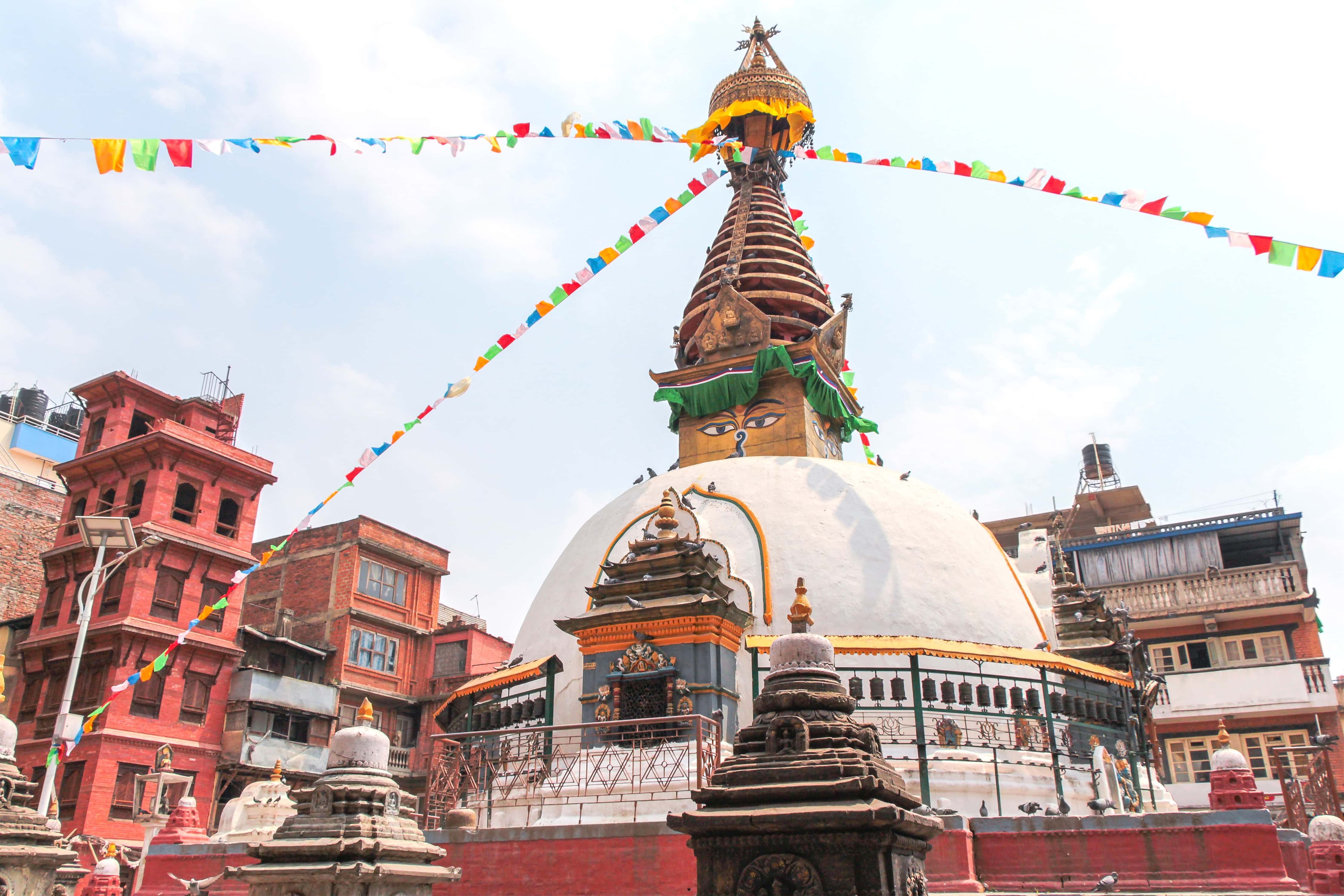
The series begins in Kathmandu, where Wes and Joel visit locations including Swayambhunath and Kathmandu Durbar Square before travelling toward Langtang.
For an international production, filming at culturally or archaeologically significant locations requires more planning than purchasing a visitor ticket and arriving with a camera.
Nepal's filming-permission process can involve the Ministry of Communication and Information Technology and other relevant authorities. Locations such as Swayambhunath and Kathmandu Durbar Square can also require consent from the Department of Archaeology depending on the nature of the production.
This is one reason international crews frequently hire a fixer in Nepal before locking their filming schedule. The fixer can identify which authority controls each location and coordinate the required documentation before the crew arrives.
Filming Permits for Langtang
Once a production enters the Langtang region, protected-area regulations become another part of the planning process.
Commercial documentary filming should not be confused with ordinary trekking access. A crew producing branded, documentary, broadcast or commercial material may require filming approvals in addition to the permissions applicable to visitors entering the region.
For projects inside protected areas, the exact approval process depends on the location and nature of the production.
Our National Park Permits in Nepal service helps international productions identify the appropriate authority, prepare supporting documents and coordinate protected-area filming requirements.
Applications for foreign productions can involve a synopsis or script, shooting itinerary, crew details, passport information, equipment lists and precise filming locations. Starting this work during pre-production is considerably safer than trying to resolve location approvals once an international crew is already in Nepal.
What About Drone Filming in Langtang?
A ground filming permit should never be assumed to cover aerial filming.
Drone operations in Nepal follow a separate compliance process. The Civil Aviation Authority of Nepal currently requires foreign nationals intending to operate drones in Nepal to obtain temporary drone registration and provide information about the proposed purpose, location and duration of operations.
Additional permissions can also apply depending on where the drone will be operated, particularly around protected, restricted or otherwise controlled locations.
For a brand production, aerial planning should therefore begin alongside the main filming-permit process rather than after the crew arrives.
High-Altitude Filming in Nepal Is a Logistics Problem as Much as a Camera Problem
Once the production leaves Kathmandu, the challenge changes.
The question is no longer simply which camera produces the best image. It becomes whether the entire technical package can continue moving, operating and remaining protected for several consecutive days in mountain terrain.
Power Has to Be Planned Before the Trek
Remote mountain accommodation should not be treated like a city production base with guaranteed high-capacity electricity.
Camera batteries, audio equipment, monitors, communications equipment and other production electronics create significant charging requirements.
A high-altitude production plan therefore needs realistic calculations for daily power consumption, charging opportunities, backup batteries and redundancy.
The more dependent a production becomes on power-hungry equipment, the more vulnerable the shooting schedule becomes.
Camera Packages Need to Stay Carryable
There is a major difference between selecting equipment for a vehicle-supported commercial and selecting equipment that has to move along a Himalayan trekking route.
Every additional body, lens, gimbal, battery and accessory eventually becomes part of somebody's load.
Our approach is to build the smallest package that can still achieve the director and DoP's creative requirements, then determine how that equipment will be distributed safely among the production team.
Access to experienced film crew and technicians in Nepal is particularly valuable when camera departments have to work in remote or high-altitude conditions.
Altitude Changes the Shooting Schedule
A callsheet cannot override the mountain.
When a route gains significant elevation, the production schedule has to consider how crew and talent respond to the altitude rather than simply calculating how many scenes can be completed each day.
That can mean shorter shooting periods, slower travel days and additional flexibility around high-altitude sections.
For documentary work, this is particularly important because pushing the schedule too aggressively can affect both the people being filmed and the crew responsible for capturing them.
Weather Contingency Is Part of the Schedule
Mountain weather can affect visibility, trail conditions, transport and aerial filming.
For that reason, contingency time should be treated as part of the production schedule rather than as an optional luxury.
A weather day that is not used is inexpensive compared with an international production losing an essential sequence because there is no flexibility left in the schedule.
Nepal Film Production's Role in Garmin 7 Days Out
Nepal Film Production provided in-country production support for the Nepal portion of the Garmin 7 Days Out project, including local coordination connected with the production's filming requirements.
Projects such as this combine several areas that our film production services in Nepal are designed to manage: permits, fixing, local crew coordination, equipment logistics, transportation and remote-location production support.
The key objective is to resolve as many logistical and regulatory problems as possible during pre-production so the visiting creative team can concentrate on the story once filming begins.
You can also view the Garmin episodes and other international productions in our production portfolio.
What Producers Can Learn From Garmin 7 Days Out Nepal
Secure the Permit Path Before Locking the Schedule
Different locations can involve different authorities.
Send your local production partner the synopsis, crew details, equipment list, proposed locations and drone requirements as early as possible. This allows the permit path to be mapped before flights, accommodation and shooting dates become difficult to change.
Build Contingency Into Himalayan Productions
Weather, altitude, transport and changing trail conditions can all affect mountain filming.
A schedule with no flexibility may appear efficient on paper but can become significantly more expensive when one unavoidable delay affects several following shoot days.
Keep the Technical Package Realistic
The most impressive camera package is not necessarily the best package for a trekking documentary.
Equipment needs to produce the required image while remaining practical to transport, protect, power and operate throughout the journey.
Use Local Crew Who Understand Production, Not Only Trekking
A mountain guide understands the terrain.
A film technician understands the camera department.
For demanding productions, the strongest team combines both types of knowledge so decisions about movement, equipment, weather and filming requirements are made with the production itself in mind.
Frequently Asked Questions
Do You Need a Permit to Film a Commercial Docuseries in Langtang?
Commercial or professional filming should not be treated as ordinary tourist photography. Foreign productions filming in Nepal can require a government filming permission process, while work inside protected areas such as Langtang may require additional location-specific coordination and approval.
The exact permits depend on the production type, crew, locations, equipment and whether aerial filming is involved.
Do Foreign Film Crews Need a Local Coordinator in Nepal?
Nepal's Film Development Board filming-permission procedure requires foreign filmmakers to appoint a local coordinator as part of the application process.
The coordinator helps submit the required documentation and communicate with the relevant authorities during pre-production.
Can You Fly a Drone While Filming in Langtang?
Potentially, but not simply because you have permission to film on the ground.
Drone operations have their own regulatory requirements. Foreign nationals must comply with current Civil Aviation Authority of Nepal requirements, and additional permissions may apply depending on the proposed location and type of operation.
Drone requirements should therefore be confirmed before finalising the aerial shooting plan.
How Long Should a Langtang Filming Schedule Be?
There is no single correct number of days.
The schedule should be based on the route, altitude profile, number of filming locations, required coverage, crew size, weather contingency and technical package.
Garmin's story centres on a seven-day trekking challenge, but an actual production schedule can be longer once Kathmandu filming, preparation, permit coordination, travel and contingency are included.
How High Did Garmin 7 Days Out Go in Nepal?
The series culminates around Kyanjin Ri in the Langtang region. Garmin's account of the journey describes the final ascent reaching approximately 15,600 feet, or about 4,750 metres, above sea level.
That elevation is one reason altitude planning becomes an operational consideration for both talent and production crew.
Planning a Trekking Documentary or Branded Production in Nepal?
Nepal Film Production is a government-registered production company based in Kathmandu providing filming permits, fixing, local crew, location scouting, production logistics, equipment coordination and support for international filmmakers working across Nepal.
If you are developing a trekking documentary, adventure campaign or high-altitude branded series, our team can review your route, locations, crew requirements and permit needs before you finalise the production schedule.
About the Author
Digbijaya Bharati is the Founder and Managing Director of Nepal Film Production. He works across research, location recce, international crew coordination and production logistics, with practical experience navigating filming regulations, government clearances and location permits for productions operating across Nepal.