
How to Hire a
Film Fixer in Nepal
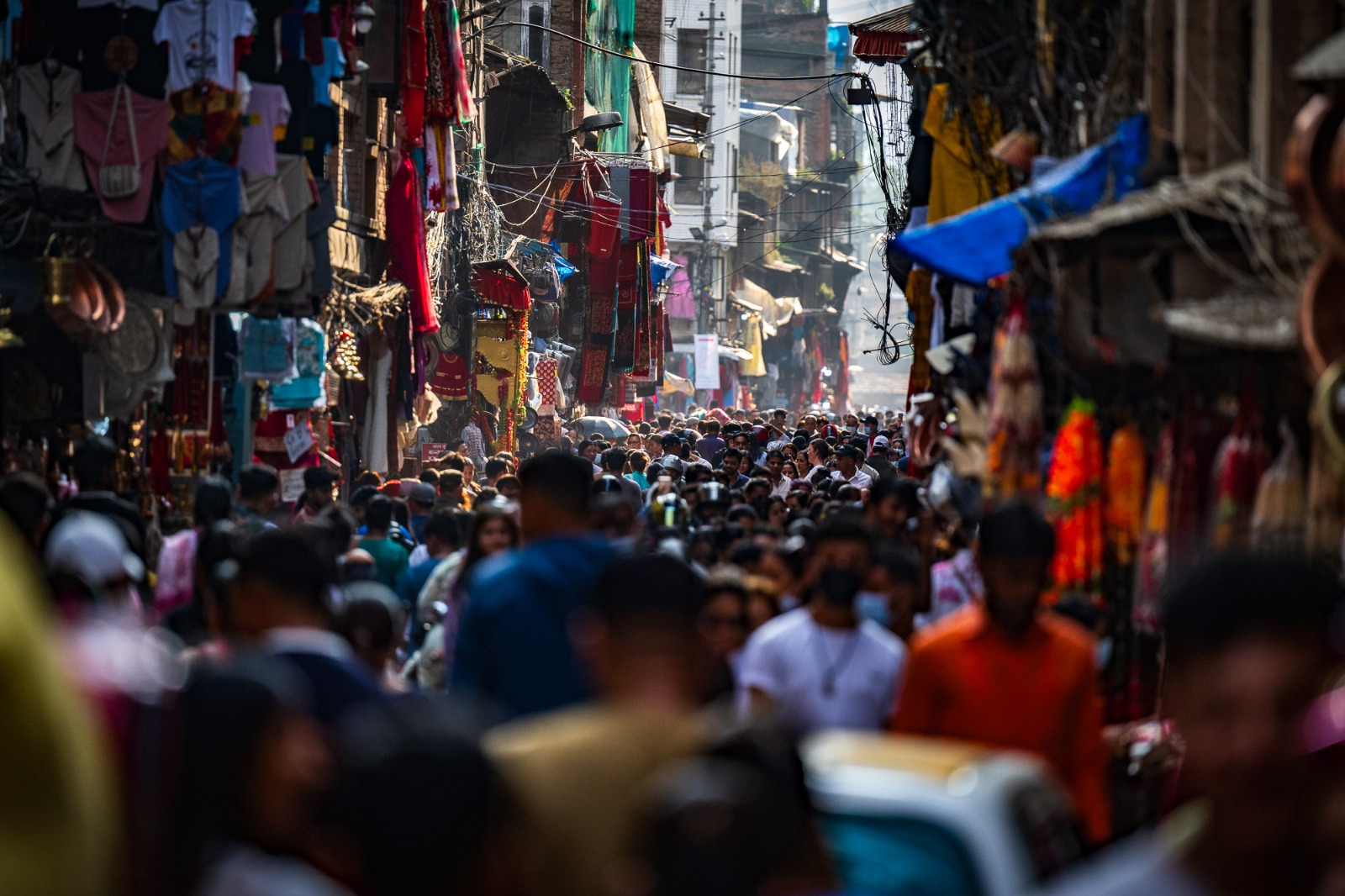
Hiring a film fixer is the decision that makes or breaks a Nepal shoot. This producer's guide covers what a fixer actually does, how to vet one, what it costs, which permits you'll need, and how the whole engagement works from first email to final wrap.
You have locked Nepal as a location. The scout photos look incredible, the story fits, and the budget just about works. Then the practical questions start landing. Who pulls the permits? Who knows which valley needs a restricted-area clearance and which one does not? Who do you call when a road washes out the night before a sunrise shoot?
That person is a fixer, and for a foreign crew, hiring the right one is the single decision that most determines whether your Nepal shoot runs smoothly or falls apart. If you are already at the point of shortlisting people to work with, it helps to understand what a good Fixer in Nepal actually delivers before you compare quotes. This guide walks through what a fixer does, how to tell a strong one from a risky one, what it costs, which permits are involved, and how the whole engagement works from first email to final wrap.
What Is a Film Fixer, Exactly?
A film fixer is a local production professional who handles everything on the ground so an incoming crew can focus on the creative work. Think of them as your in-country problem-solver: part logistics coordinator, part government liaison, part local producer, and part safety net.
For international productions, the fixer is the bridge between how you are used to working and how things actually get done in the host country. They speak the language, know the officials by name, understand the permit system, and can tell you in five minutes what would take you five weeks to work out alone. On a documentary or news shoot, the fixer is often the difference between getting the access you need and being turned away at the gate.
The role is built on relationships more than anything else. A fixer who has spent years working with the same government offices, the same crew base, and the same regional guides can move faster and open doors that a newcomer simply cannot. That accumulated trust is what you are really paying for.
Fixer, Line Producer, or Coordinator: What Is the Difference?
These titles overlap, and on a small shoot one person may wear all three hats, so it is worth being clear about them.
A fixer focuses on local facilitation: access, permits, locations, and on-ground logistics in a specific country or region. A line producer owns the production budget and schedule end to end, tracking every line item and managing the money across the whole production, not just the local leg. A production coordinator sits inside the production office and keeps the day-to-day paperwork, call sheets, and travel moving. When you hire in Nepal, you are almost always hiring a fixer first, and asking whether they can also line-produce the local portion if your production needs that.
What Does a Film Fixer Do in Nepal?
The work is broad, but in Nepal it usually falls into six core areas. The best way to judge a fixer is to understand each one well enough to ask sharp questions about it.
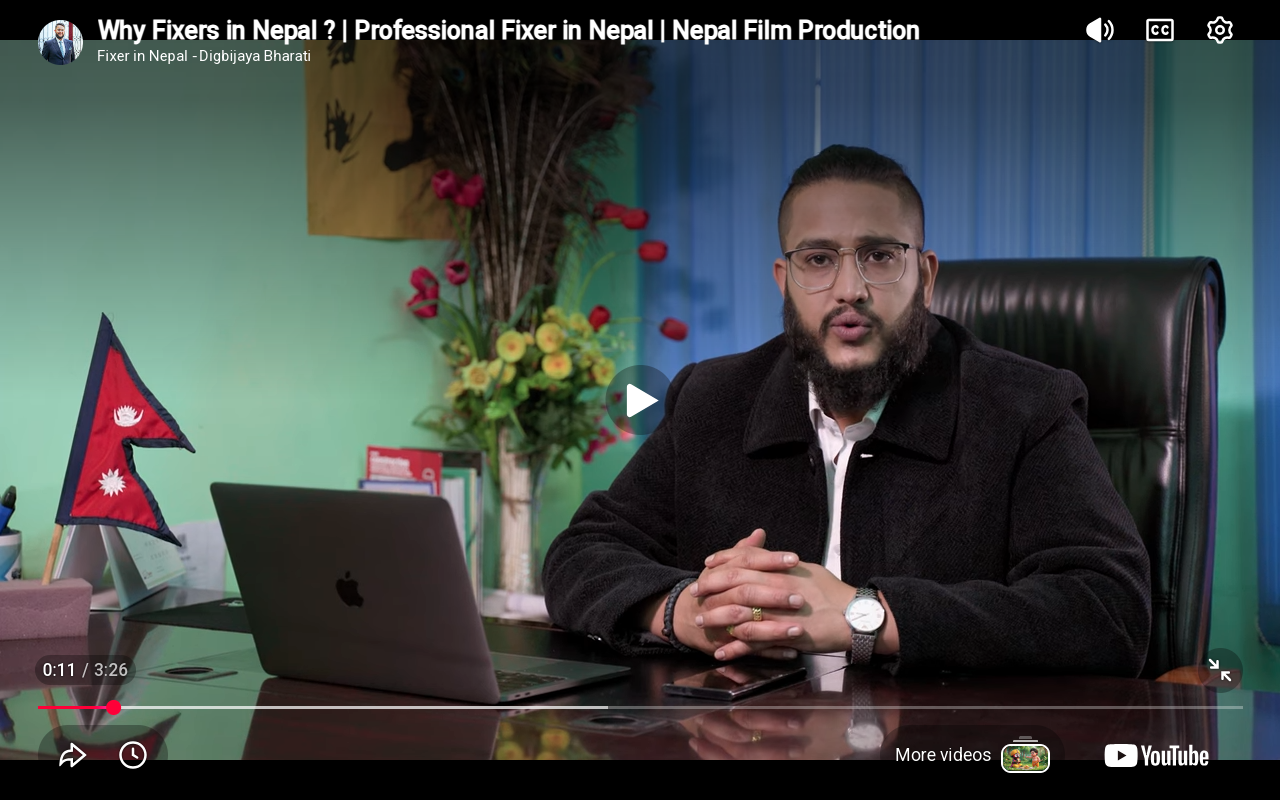
Permits and Government Approvals
Nepal requires foreign productions to obtain filming permits, and depending on your locations, several different authorities may be involved. The Film Development Board is the central body for film permits. The Ministry of Home Affairs and, in some cases, the Ministry of Culture, Tourism and Civil Aviation come into play for specific approvals. Heritage sites fall under the Department of Archaeology, national parks under the Department of National Parks and Wildlife Conservation, and aerial work under the Civil Aviation Authority of Nepal.
A fixer prepares the applications, submits them through the correct channels, tracks them to approval, and knows the realistic turnaround for each. This is the area where experience matters most, because a small mistake in how paperwork is filed can add weeks to your timeline.
Location Scouting and Access
Finding a beautiful location is only half the job. A fixer confirms you can legally and physically reach it, that the light and access work for your schedule, and that the permissions attached to it are obtainable in your timeframe. In Nepal that means understanding heritage-site rules in the Kathmandu Valley, park regulations in Chitwan and Bardia, seasonal access to trekking regions, and the special-permit requirements for restricted areas like Upper Mustang.
Good fixers will also flag the non-obvious constraints: a temple that allows exterior filming but not interiors, a viewpoint that needs a local guide, or a village where filming is welcome only after the right introductions are made.
Local Crew and Cast
Fixers maintain networks of camera operators, sound recordists, gaffers, production assistants, drivers, guides, porters, and local talent. From that network they assemble a team sized to your production and budget. A deep, active crew database means they can staff quickly and swap people in when schedules shift, rather than scrambling at the last minute.
Transport and Logistics
Nepal's geography is the challenge and the appeal. Remote roads, high-altitude routes, river crossings, and helicopter charters all need coordinating, usually with a backup plan built in, because mountain weather does not read call sheets. A fixer arranges vehicles, drivers, domestic flights, charters, accommodation, and the timing that ties them together so your crew is where it needs to be when the light is right.
Equipment and Customs Clearance
Bringing cameras, lenses, lighting, and drones into Nepal, and taking them out again, requires customs documentation and often a carnet. A fixer handles the clearance paperwork so your gear is not sitting in a bonded warehouse at the airport while your shoot days tick by. They also advise on what is worth bringing versus renting locally, which can save both cost and customs headaches.
Drone and Aerial Permits
Aerial filming needs Civil Aviation Authority approval, and Nepal has meaningful no-fly zones, including areas near the international airport, sensitive border regions, and certain heritage and restricted zones. A fixer manages the permit applications, briefs the pilot on compliance, supervises on the day, and handles the post-flight paperwork.
Do You Really Need a Fixer to Film in Nepal?
For a foreign crew, in most cases yes, and it is not simply a convenience. Nepal's national filming permits and ministerial clearances are difficult to obtain without local facilitation, and shooting without them carries real consequences: confiscated footage, fines, deportation risk, or being shut down partway through a production you have already paid to fly in.
Even where a shoot is small enough to attempt alone, the time, uncertainty, and local knowledge involved usually cost more than a fixer's fee. The honest exception is a tiny, permit-free personal project with no commercial use. Anything commercial, broadcast, documentary, or crewed almost always needs professional facilitation on the ground.
Understanding Nepal's Permit Landscape
You do not need to become an expert in Nepali film regulation, but understanding the shape of it helps you brief a fixer well and spot when someone does not know what they are talking about.
Permits in Nepal are layered rather than single. A base film permit covers your right to shoot as a foreign production. On top of that sit location-specific permissions: heritage clearances for the old cities and temples, park permits for wildlife areas, trekking and conservation-area permits for the mountains, restricted-area permits for regions like Upper Mustang and Dolpa, and aerial permits for any drone work. Each has its own authority, fee structure, and lead time, and some can only be applied for once earlier ones are in hand. This layering is exactly why lead time matters so much, and why a fixer who knows the sequence is worth more than one who simply promises to handle it.
When Should You Start Looking?
Earlier than you think. As a rule, engage a fixer the moment pre-production begins, and ideally six to eight weeks before your shoot dates. Permits take time, crew books up, and customs clearance cannot be rushed.
For complex work, give yourself more runway. The following is a rough guide to lead times.
Production type | Suggested lead time |
|---|---|
Simple urban shoot (Kathmandu, Pokhara) | 4 to 6 weeks |
Standard documentary or commercial | 6 to 8 weeks |
National park or wildlife filming | 8 to 10 weeks |
Restricted areas (Upper Mustang, Dolpa) | 10 to 12 weeks |
Everest region and high-altitude logistics | 10 to 12 weeks or more |
Aerial or drone-heavy production | Add 2 to 4 weeks on top |
Treat these as starting points, not guarantees. Festival seasons, monsoon timing, and government holidays can all stretch a schedule, and a good fixer will tell you that upfront.
How Much Does a Fixer in Nepal Cost?
There is no single sticker price, because a fixer's fee scales with the complexity of your production. Most work on either a day rate for their coordination time or a project package that bundles fixing, crew, permits, and logistics into one budget.
The factors that actually move the number:
Cost factor | Effect on price |
|---|---|
Shoot duration | More days, higher total, though day rates often ease slightly on longer shoots |
Number of locations | Multi-city or multi-region shoots need more coordination |
Location type | Restricted areas, national parks, and high-altitude regions cost more to access |
Crew size | Larger crews mean more hiring, transport, and management |
Permits required | Aerial, heritage, and restricted-area permits add fees and lead time |
Transport and accommodation | Helicopters, four-wheel-drive vehicles, and remote lodging move the budget significantly |
Season | Peak trekking and festival seasons raise costs for crew, flights, and lodging |
The most useful thing you can do is ask for an itemised quote rather than a lump sum. A transparent fixer will break out their coordination fee, permit costs, crew rates, transport, and logistics separately. That lets you see where the money goes, compare like for like between providers, and understand what is included versus what will be billed on top. Be especially clear about what is excluded, since items like helicopter charters, extra shooting days, and last-minute permit changes are common sources of budget surprises.
What to Look For in a Good Fixer
Not all fixers are equal, and the gap between a strong one and a weak one shows up exactly when you can least afford it. Look for the following.
Experience with international crews. Someone who has worked with broadcasters or streaming productions understands foreign standards, insurance expectations, delivery pressure, and how to work alongside a director who does not speak the language.
Real government relationships. Permit turnaround depends heavily on who the fixer knows and how the paperwork is presented. Ask specifically about their permit track record for locations like yours.
A genuine crew and location network. A deep, active local database means they can staff and scout quickly instead of improvising.
Transparent, itemised pricing. Clear budgets with no vague catch-all line items.
Verifiable references. Past clients you can actually contact, ideally in your genre.
A safety-first mindset. Documented risk assessments and contingency plans, which matter enormously for remote, aerial, or high-altitude work.
Communication quality. How quickly and clearly they answer your first few emails is the best early signal of how the shoot itself will run.
Questions to Ask Before You Hire
Bring these to your first call. The answers tell you almost everything.
Which permits will my specific shoot need, and how long does each take?
Have you handled productions in my genre and at my exact locations before?
Can you provide an itemised quote and references from international clients?
Who will be my day-to-day contact, and are they reachable throughout the shoot?
How do you handle customs clearance for our equipment?
What is your contingency plan if weather, roads, or permits go wrong?
Do you carry or arrange insurance, and do you provide risk assessments?
What is not included in your quote, and what would trigger extra charges?
Red Flags to Watch Out For
Be cautious if you see any of these signs.
Vague pricing, or reluctance to itemise costs. No verifiable references or portfolio of international work. Uncertainty about permits, especially a fixer who cannot clearly explain the approval process for your locations. Pressure to skip paperwork or handle things unofficially, which is how footage gets confiscated. Slow or unclear communication before you have even signed, because it rarely improves once you have paid. And quotes that look dramatically cheaper than everyone else's, which usually means something important has been left out of the number.
How the Engagement Actually Works
A well-run fixing engagement moves through three phases, and knowing the shape of it helps you spot whether a fixer is organised.
In pre-production, you share your treatment, locations, and dates. The fixer maps the permits, drafts an itemised budget, begins scouting and crewing, and agrees a clear scope of work with you in writing. This is where a good fixer earns their fee, long before anyone picks up a camera.
During the shoot, they run on-ground logistics, manage the local crew, liaise with officials and location owners, and troubleshoot in real time. Your job becomes the creative work, which is the entire point of hiring well.
At wrap, they close out permits, handle equipment customs on the way out, settle local accounts, and, if you are smart, become the contact you keep for the next project. Many productions find it cleaner to work with an established Film Production Company that offers fixing in-house rather than a lone freelancer, because permits, crew, gear, and logistics then sit under one accountable roof, with the depth to absorb problems when they arise.
Location Notes That Change How You Plan
Nepal is not one shooting environment. A quick sense of the major regions helps you plan realistically.
The Kathmandu Valley combines dense heritage sites, municipal permissions, and crowd management, so filming here is as much about coordination as it is about camera work. Pokhara offers lakeside and mountain backdrops with easier logistics, which is why travel and adventure productions favour it. The Everest region demands altitude logistics, Sagarmatha National Park rules, trekking permits, and often helicopter support. Upper Mustang and Dolpa are restricted areas that need special government permits and deep planning, and few fixers have the network to run them reliably. Chitwan and Bardia are wildlife parks with strict environmental compliance and guide requirements. Lumbini, as the birthplace of the Buddha, calls for sensitive cultural coordination and heritage-board approval. Matching your fixer's real experience to your specific regions is one of the most important checks you can make.
The Bottom Line
Nepal rewards productions that plan well. Its landscapes and stories are extraordinary, but the logistics are real, and the right fixer is what turns a daunting foreign shoot into a manageable one. Get clear on your permits, start early, ask the hard questions, and hire someone who can show you they have done it before. Do that, and the country opens up in a way it never does for crews who try to wing it.
Frequently Asked Questions
What is a fixer in film production? A fixer is a local production expert who arranges permits, crew, locations, and logistics for visiting crews. For international productions, they are the on-the-ground bridge between the incoming team and the local systems, officials, and regulations.
What does a fixer do in film? A fixer handles everything between the crew and the host country: location scouting and access, permit processing, hiring local crew, transport and accommodation, equipment customs clearance, and real-time problem-solving during the shoot.
How much does a fixer cost in Nepal? It depends on shoot length, the number and type of locations, crew size, season, and the permits required. Most fixers charge a day rate or a project package. Ask for an itemised quote so you can see exactly what you are paying for and what is excluded.
How early should I hire a fixer in Nepal? Start as soon as pre-production begins, ideally six to eight weeks out. Allow more time for restricted areas, aerial work, national parks, or the Everest region, where permits and logistics take longer.
Do I need a fixer for drone filming in Nepal? Yes. Aerial filming requires Civil Aviation Authority approval and no-fly-zone compliance. A fixer manages the permit applications, on-site pilot supervision, and the paperwork that follows.
What is the difference between a fixer and a line producer? A fixer focuses on local facilitation, such as access, permits, and on-ground logistics. A line producer manages the production budget and schedule end to end. On smaller shoots one person may cover both, and on larger ones they are distinct roles.
Can a fixer handle equipment customs clearance? Yes. Customs clearance for cameras, lighting, drones, and sound gear is usually part of a fixer's pre-production services, covering both the equipment entering Nepal and leaving it.
Do I really need a fixer, or can I film independently? For any commercial, broadcast, or documentary work, a fixer is effectively required, because the permits and clearances are hard to secure without local facilitation. Only very small, permit-free personal projects can reasonably go without one.