
What Are the Domestic Flight Camera-Baggage
Limits in Nepal for Film Crews?
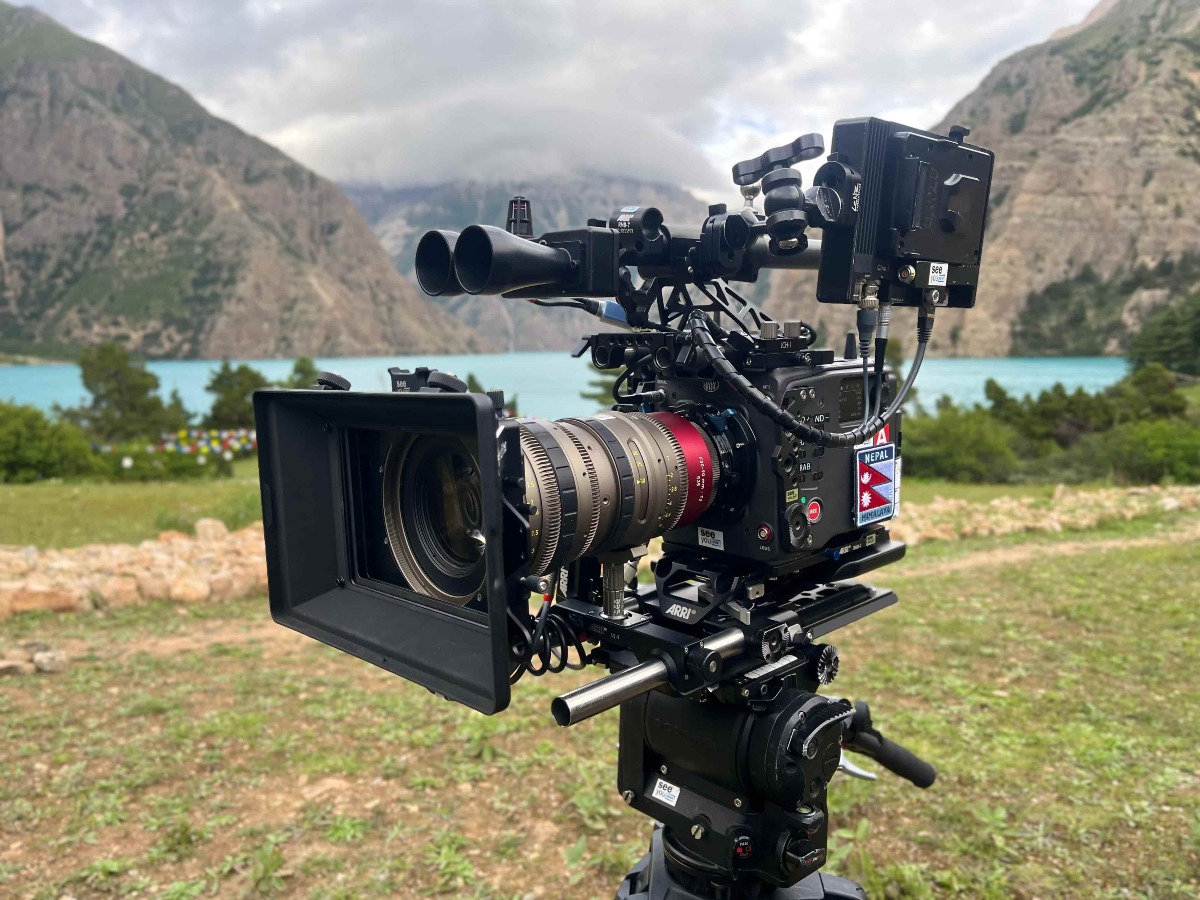
Getting a camera package through Nepal customs is only half the logistics problem. The next question is whether that equipment can physically travel on the domestic aircraft serving your filming location.
For normal domestic sectors, baggage allowances are often manageable. For Lukla, Jomsom and similar small-aircraft operations, the numbers become much tighter.
If you are importing equipment first, plan the domestic movement at the same time as your customs clearance and insurance. A permitted and cleared camera package does not receive a larger airline baggage allowance.
How much camera baggage can you take on a Nepal domestic flight?
For many standard scheduled domestic routes, current airline rules show roughly 15–30 kg of checked baggage plus about 5 kg of cabin baggage, depending on the carrier, route and fare class. Current fare tables also show that buying a different fare class can change the checked allowance substantially.
For Lukla and Jomsom, the figure a camera team should plan around is commonly:
10 kg checked + 5 kg cabin = approximately 15 kg per passenger. Current mountain-airline material publishes this 10 + 5 kg allowance.
Flight type | Checked baggage | Cabin baggage | What it means for production |
Standard domestic route | About 15–30 kg | Usually 5 kg | Often workable for a compact documentary package |
Lukla/Jomsom-type mountain sector | About 10 kg | About 5 kg | Camera package becomes a major scheduling issue |
Excess baggage | Route-specific charge | — | Payment does not automatically guarantee carriage |
Helicopter charter | Mission-specific payload | — | Calculated from aircraft, passengers, fuel, altitude, weather and landing site |
Other remote/STOL sectors should be checked individually rather than assuming every mountain airport has exactly the same rule.
What does 15 kg per person actually mean for a camera crew?
For a two-person team, 15 kg each gives only about 30 kg of total baggage allowance for production equipment and personal luggage combined.
An illustrative lightweight package could already look like this:
Two camera bodies: 5 kg; lenses: 4 kg; tripod: 3 kg; sound equipment: 2 kg; batteries and chargers: 4 kg; laptop and media: 3 kg; bags and protection: 3 kg; two people's basic personal kit: 8 kg.
That is approximately 32 kg before adding lights, a drone, a second tripod, winter clothing or backup equipment.
That is why the mountain-flight baggage limit is not a minor excess-baggage charge. It can determine the camera package itself.
How much does excess baggage cost on Nepal domestic flights?
There is no reliable single Nepal-wide price per kilogram. Excess rates are normally sector-specific.
For comparison, these were published on the operators' official websites when this page was reviewed:
Domestic sector | Buddha Air published rate | Yeti Airlines published rate |
Kathmandu–Pokhara | NPR 165/kg | NPR 125/kg |
Kathmandu–Biratnagar | NPR 245/kg | NPR 200/kg |
Kathmandu–Bhadrapur | NPR 310/kg | NPR 225/kg |
Kathmandu–Nepalgunj | NPR 335/kg | NPR 250/kg |
Kathmandu–Janakpur | NPR 135/kg | NPR 100/kg |
Kathmandu–Simara | NPR 95/kg | NPR 90/kg |
Sources: Buddha Air baggage information and Yeti Airlines excess baggage charges. The published rates currently vary by route, and airlines can revise baggage prices and conditions without notice. Always check the operating airline's official page immediately before ticketing.
These examples are standard-route prices, not a promise that the same amount of excess equipment can be loaded onto a Lukla or Jomsom flight.
Can you simply pay for excess baggage to Lukla?
Sometimes extra baggage can be accepted and charged. But a production should never build its mountain schedule on the assumption that paying the fee guarantees carriage.
There is an important difference between:
“The airline charges for excess baggage” and “the aircraft has enough payload available to carry it today.”
Airline conditions show that excess carriage can remain dependent on available payload, and even prepaid excess services may be subject to payload availability.
On a weight-restricted flight, additional equipment may therefore travel later, be split between flights or not be accepted on that departure.
For a camera team, identify three groups before reaching the airport: equipment that must travel with the crew, equipment that can arrive on a later rotation, and equipment that can be replaced or rented locally.
When does a helicopter charter make more sense?
Once the production package is far beyond scheduled-flight limits, a helicopter charter can become a logistics solution rather than a luxury.
Do not, however, publish or budget around a universal statement such as “a helicopter can take 500 kg.”
For example, Airbus publishes a 1,075 kg useful load for the H125, one of the light single-engine helicopter types suited to high-altitude work. That useful-load figure is not the amount of camera equipment you can load. Fuel, pilot, passengers and operational requirements all consume it. Actual allowable payload also changes with altitude, temperature, wind and landing conditions.
The correct process is to send the charter operator:
crew weights + exact equipment weights + case dimensions + destination + proposed landing point.
The operator can then provide the mission-specific allowable payload.
For larger productions, Nepal Film Production's line production services can coordinate the transport plan alongside the rest of the production schedule. Nepal Film Production also documents the use of domestic flights, helicopters, road vehicles and porters for remote filming logistics.
What happens when Lukla flights leave from Ramechhap?
Camera teams should also confirm the departure airport, not only the baggage allowance.
During busy Everest trekking periods, Lukla operations commonly shift from Kathmandu to Ramechhap/Manthali. Current operator guidance describes this seasonal arrangement during high-demand periods.
That creates an additional road movement before the flight, so camera cases, batteries and crew call times need to be planned for the road leg as well.
Do not assume a Kathmandu–Lukla ticket automatically means the aircraft will depart Kathmandu on your filming date.
How should camera equipment be packed for a mountain flight?
Use compact or soft-sided protection for non-fragile support equipment where practical; bulky hard cases are less flexible inside small baggage compartments.
Keep the camera body, recording media and other irreplaceable items with the crew where cabin rules permit.
Spare lithium batteries and power banks belong in cabin baggage, not checked baggage. IATA currently states that batteries up to 100 Wh are generally allowed in cabin baggage; 100–160 Wh batteries may require airline approval, while batteries above 160 Wh are generally not accepted as normal passenger baggage. Check the current IATA battery guidance.
Remember that those batteries compete directly with the approximately 5 kg cabin allowance.
Weigh every camera bag, tripod bag and personal bag before leaving Kathmandu. Do not discover the package weight at the domestic check-in counter.
Put exact weights and dimensions on the production equipment manifest so that scheduled-flight, porter and charter options can be compared quickly.
If the baggage limit forces a major equipment reduction, compare transporting the package with bringing versus renting equipment in Nepal.
What other options are there if the package will not fit?
The simplest answer is often to stop treating the whole package as one movement.
The crew can travel on the scheduled flight while non-essential equipment follows on another rotation. Gear can be staged in Kathmandu, Pokhara or another practical hub. Where road access exists, equipment can move ahead by vehicle. After a mountain airstrip, suitable cases can continue with porters or other local transport.
For complicated remote shoots, build the transport plan into your wider production logistics in Nepal rather than solving it at the airport.
Frequently asked questions
Can we pay for excess baggage to Lukla?
Possibly, but payment does not guarantee that the extra weight will be loaded. Scheduled mountain flights remain subject to aircraft payload and operating conditions. Confirm the weight with the operating airline before the shoot and maintain a backup movement plan.
What happens if our camera equipment is offloaded?
Ask immediately whether it can be tagged or accepted on a later rotation. Keep the shooting essentials, media and compliant spare batteries with the travelling crew where permitted. Your backup should already identify what can arrive later, move by road or porter, or be replaced locally.
Can we charter a helicopter only for the equipment?
Potentially, yes, but the operator must approve the cargo, route, landing arrangement and actual payload. Batteries and other dangerous-goods classifications also need to be declared correctly. Current charter conditions used in Nepal explicitly make payload dependent on factors including weather, cargo size and helipad conditions.
Do professional camera cases receive special or fragile baggage allowance?
Do not assume so. Fragile handling does not create additional baggage weight. Airline policies still apply to the case's size and weight, and some carrier conditions specifically limit liability for fragile or valuable electronics in checked baggage.
Does having a Nepal filming permit increase the baggage allowance?
No. A filming permit, customs clearance and airline baggage acceptance are separate issues. Clearing professional equipment into Nepal does not override the airline's baggage, dangerous-goods or aircraft-payload rules.