
What Should You Send a Nepal Production
Team Before We Quote Your Shoot?
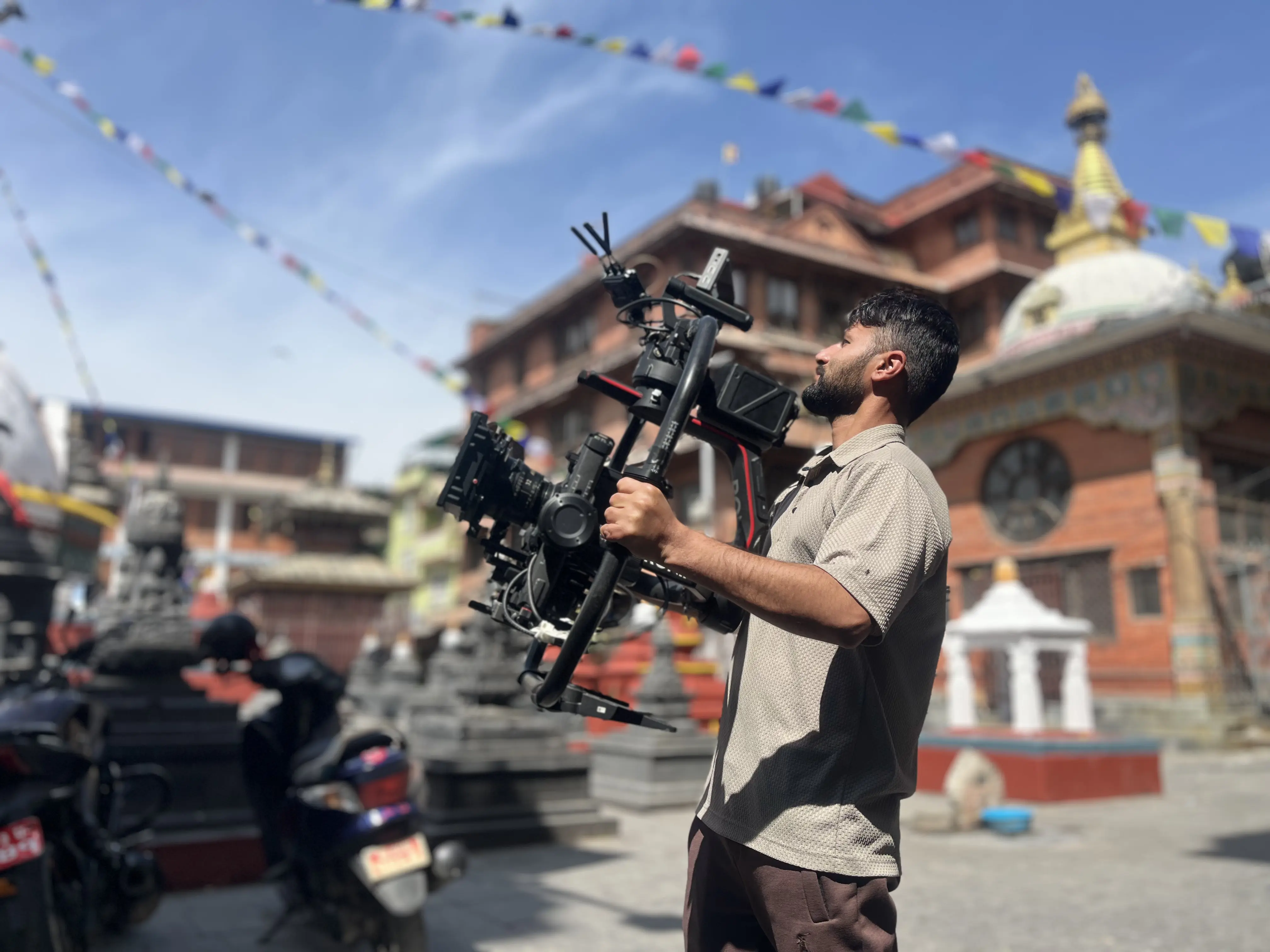
An accurate production quote in Nepal starts before the budget spreadsheet. Your local production partner needs enough information to understand what the creative idea demands on the ground: how many people must move, where they need to go, what equipment is required, what access may be involved, and how much time the production realistically needs.
Your brief does not have to be a locked production bible. It should simply remove the biggest unknowns. The clearer the information you provide, the more useful the first estimate will be—and the fewer assumptions will need correcting later.
Why a Good Production Brief Matters Before Budgeting Begins
A request such as “three-day documentary shoot in Nepal” still leaves major cost variables unanswered. Three days filming controlled interviews in Kathmandu is very different from three days following contributors through a mountain region.
A strong production brief allows the local team to separate confirmed requirements from assumptions. It also helps identify costs around location research, transport, accommodation, access, specialist crew, safety requirements and regulatory coordination before they appear unexpectedly later.
This is particularly relevant in Nepal. The Film Development Board lists project materials, foreign crew details, exact filming dates and locations, and equipment information among the documentation required for foreign filming applications. Sharing these details early can therefore support both quotation and subsequent pre-production.
Project Basics Your Local Production Team Needs
Format and production type
Start by explaining what you are making: documentary, commercial, branded content, feature film, factual television, travel series, music video or social content.
Include the approximate finished duration, intended audience and whether filming in Nepal represents the entire production or one section of a larger international project.
These details influence everything from crew structure to permissions and equipment.
Expected final deliverables
List exactly what the shoot needs to produce. Deliverables might include:
A hero film or broadcast episode
Interviews and B-roll
Vertical social cutdowns
Stills photography
Behind-the-scenes content
Raw footage for overseas post-production
If your Nepal team will also support post-production or media management, include resolution, aspect ratio, audio, storage and delivery requirements.
Number of filming days
Separate actual shoot days from location recce, preparation, travel and rest days.
If your schedule is flexible, give an approximate date range. Identify dates that are already fixed because of talent availability, festivals, client schedules, international flights or other production commitments.
Explain the Creative Requirements
Treatment and visual references
Send the latest treatment, script, storyboard, creative deck or director's notes.
Visual references are especially valuable. They help a local producer understand whether your creative requires controlled interiors, Himalayan landscapes, crowded urban streets, rural communities, historic architecture or more complicated access.
The producer does not need every creative decision finalized, but they need enough context to understand what must be achieved.
Shot requirements
Flag shots that significantly change the production footprint.
Examples include drone filming, tracking vehicles, cranes, large lighting setups, night shoots, crowd scenes, high-altitude sequences, action, specialist rigs or frequent company moves.
A clear shot list allows equipment, crew, transport and permission requirements to be budgeted more realistically.
Interview and talent requirements
Explain how many interviewees, contributors, actors or models are expected and whether they are already confirmed.
If local casting is required, say so. Also identify requirements for translators, hair and makeup, wardrobe, holding areas, releases and quiet interview environments.
Provide Your Location Requirements
Visual characteristics
Describe the required visual character before insisting on a specific place.
For example, “traditional courtyard with Himalayan character” gives a location team more useful information than simply requesting a “Kathmandu location.”
Include reference images, preferred regions and any locations already approved by the director or agency.
Accessibility expectations
Explain what needs to reach each location.
Can the shoot operate with a director, DP and sound recordist carrying lightweight equipment, or must the location accommodate vehicles, lighting, grip, generators, talent and a larger unit?
In Nepal, terrain, road access, domestic travel and the physical movement of equipment can materially affect the schedule. Local scouts therefore assess locations for practical production feasibility as well as visual suitability.
Interior versus exterior requirements
For interiors, mention requirements such as room size, natural light, ceiling height, power, sound control and equipment load-in.
For exteriors, identify sunrise or sunset requirements, weather dependency, crowd control, power, toilets, shelter and potential unit-base needs.
Define Your Crew Footprint
Provide two simple lists: the crew travelling to Nepal and the positions you expect to hire locally.
For travelling crew, include each person's role and approximate arrival and departure dates.
For local crew, identify requirements such as production management, assistant directors, camera assistants, gaffer, grip, sound recordist, drivers, production assistants, translators, mountain specialists or medical support.
If the final local crew structure is not yet decided, explain the scale and working style you expect. Your production partner can then recommend the most efficient setup.
List the Equipment You Will Bring and Need Locally
Separate equipment being imported into Nepal from equipment you expect to source locally.
For travelling equipment, list cameras, lenses, lighting, grip, sound equipment, batteries, drones and specialist systems. Include quantities and approximate values where possible.
This information affects more than rental budgeting. Nepal's Film Development Board specifically requests an equipment list with values for foreign productions, including for customs-related planning.
For local rentals, provide preferred models along with acceptable alternatives. Include requirements for power, media, data management, monitors, communications and specialist rigging.
Share Your Proposed Schedule and Travel Plan
Send tentative international arrival and departure dates, filming dates, accommodation assumptions and known location moves.
If your production will leave Kathmandu, identify proposed destinations and whether the schedule assumes road transport, domestic flights, trekking or helicopter movements.
Most importantly, distinguish between fixed dates and flexible dates.
Your Nepal production team can then test whether the proposed schedule is practical before unrealistic travel assumptions become budget problems. This is also where understanding how we manage full productions on the ground can help, because locations, crew, transport, equipment and scheduling must be planned together.
Flag Any Sensitive or Regulated Filming Requirements
Do not wait until advanced pre-production to reveal that the treatment requires a drone, archaeological site, protected area, religious location or restricted region.
Nepal's Film Development Board notes that additional approvals or consent can apply to locations including archaeological sites, conservation areas, Pashupatinath, Lumbini, Upper Mustang and Upper Dolpa. Aerial filming may also require additional government permissions.
At the quotation stage, your production partner does not need every approval completed. They do need enough information to identify likely permissions, fees, coordination requirements and potential scheduling implications.
Production Brief Checklist for International Filmmakers
Project title, format and production type
Synopsis, script, treatment or creative deck
Final deliverables and technical specifications
Proposed filming, prep, scouting and travel days
Shot list and specialist filming requirements
Interview, contributor, casting and talent needs
Location references and preferred regions
Accessibility, transport and unit-base expectations
Travelling crew list and roles
Local crew requirements
Imported equipment list with approximate values
Local equipment rental requirements
International arrival and departure dates
Internal travel and accommodation assumptions
Drone, heritage, conservation or restricted-location requirements
Post-production and media-management requirements
Approximate budget range, if available
Client approval process and key decision-makers
What Happens After the Production Partner Receives Your Brief?
A good production partner should test the brief before simply attaching prices to it.
Expect questions about locations, access, crew structure, equipment choices, travel assumptions and schedule. The local production team may suggest an initial location review, recommend locally available equipment alternatives, identify permissions that need further investigation or separate confirmed costs from items that depend on final creative decisions.
Your first quote should therefore be viewed as a working production model rather than an unchangeable final budget. As locations, treatment, crew, equipment and filming dates become confirmed, the estimate can be refined into a production-ready budget.
The best production brief is not necessarily the longest. It is the one that clearly communicates the creative intention, production footprint, fixed requirements and remaining unknowns.
Provide that information before requesting your Nepal film production quote, and your local partner can spend less time guessing and more time building a realistic, efficient plan for the shoot.