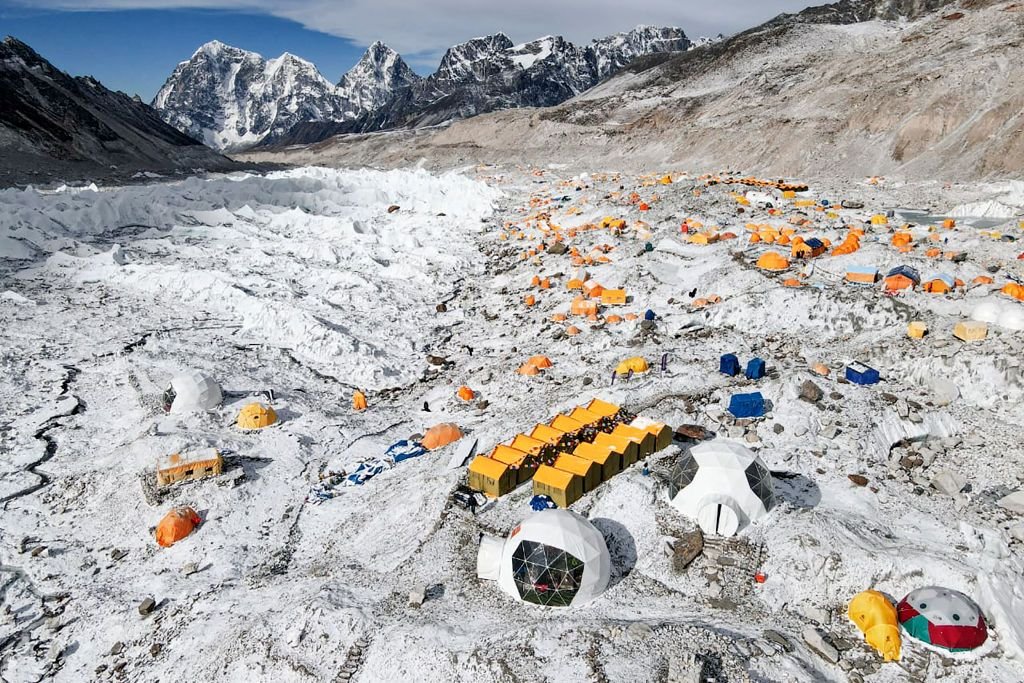
The Everest region — officially the Khumbu — is located in northeastern Nepal, in the Solukhumbu District. The largest and most important town is Namche Bazaar (3,440m), the commercial heart of the Khumbu, where most trekkers acclimatise for two or more days. From Namche, the trail continues through Tengboche, Dingboche, and Lobuche to Everest Base Camp (5,364m).
The region is also home to the famous Thyangboche Monastery (Tengboche), one of Nepal's most sacred Buddhist sites and the venue for the spectacular annual Mani Rimdu festival each November, set against the jaw-dropping backdrop of Ama Dablam (6,812m), Nuptse, Lhotse, and Everest itself.
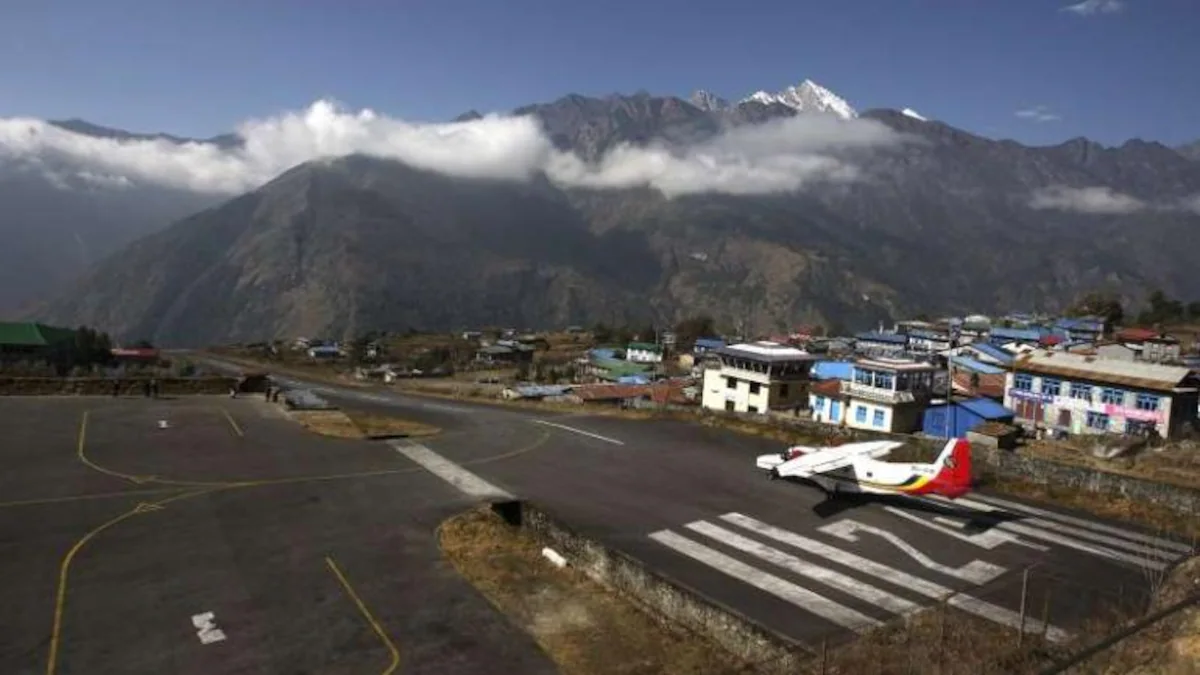
Virtually all treks in the Khumbu begin with a flight from Kathmandu to Lukla (Tenzing-Hillary Airport). The flight takes approximately 45 minutes and offers glorious aerial views of the Himalayan range. From Lukla, the trek to Everest Base Camp typically takes 10–14 days, passing through Phakding, Namche Bazaar, Tengboche, Dingboche, Lobuche, and Gorak Shep.
Helicopter access to EBC or Kala Patthar is available for high-budget productions requiring rapid deployment of crew and equipment. Permits from the Department of Civil Aviation and Sagarmatha National Park are required for all flights.
The Everest region offers unparalleled Himalayan cinematography:
- Everest Base Camp (5,364m) — The famous tent city during expedition season (March–May) is a world of its own — flags, seracs, the Khumbu Icefall — an iconic location for expedition documentaries.
- Kala Patthar (5,644m) — The single best vantage point for filming the southwest face of Everest without technical climbing. The ridge also commands views of Nuptse, Lhotse, and Pumori.
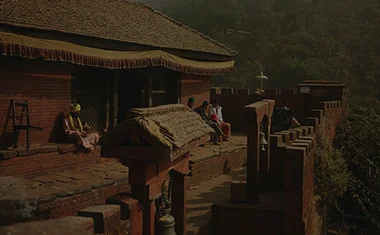
- Thyangboche Monastery — A visually stunning stone monastery in an extraordinary high-altitude setting, with Ama Dablam as a backdrop. Site of the Mani Rimdu festival.
- Namche Bazaar — The amphitheatre-shaped market town is a fascinating cultural hub with a Saturday market, Sherpa museum, and dramatic setting on a ridge above the Bhote Koshi river.
- Gokyo Lakes — A string of turquoise glacial lakes at 4,700–5,000m, with Gokyo Ri providing some of the finest panoramic Himalayan views available without extreme mountaineering.
Best filming seasons: March–April (spring) and October–November (autumn) offer the clearest skies and most stable weather. Winter treks (December–February) are possible and much quieter with dramatic snow conditions.
Quick Facts
- Region
- Himalayan
Film here?
Our expert scouts can organize permits, logistics, and crew for this location.
Get in Touch arrow_forward