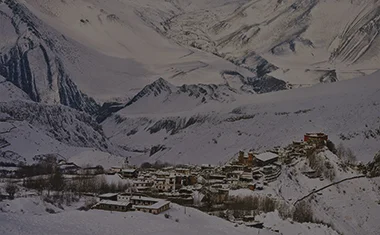
Mustang is a district in the Gandaki Province of northwestern Nepal, divided into Lower Mustang (the Thakali heartland around Jomsom, Marpha, and Kagbeni) and Upper Mustang (the former Kingdom of Lo, centred on Lo Manthang). The entire district lies in the rain shadow of the Annapurna-Dhaulagiri massif, receiving very little monsoon rainfall, which has given it a landscape of extraordinary sculpted canyons, red and ochre cliffs, and high desert.
Upper Mustang was closed to foreigners until 1992 and retains a special permit zone designation. The district borders Tibet/China to the north, and its culture, language, and architecture are deeply Tibetan Buddhist — more so than almost anywhere else on the Nepal side of the border. Lo Manthang (3,840m) — the ancient walled capital of the Kingdom of Lo — is one of the most intact medieval Tibetan-style towns in the world.
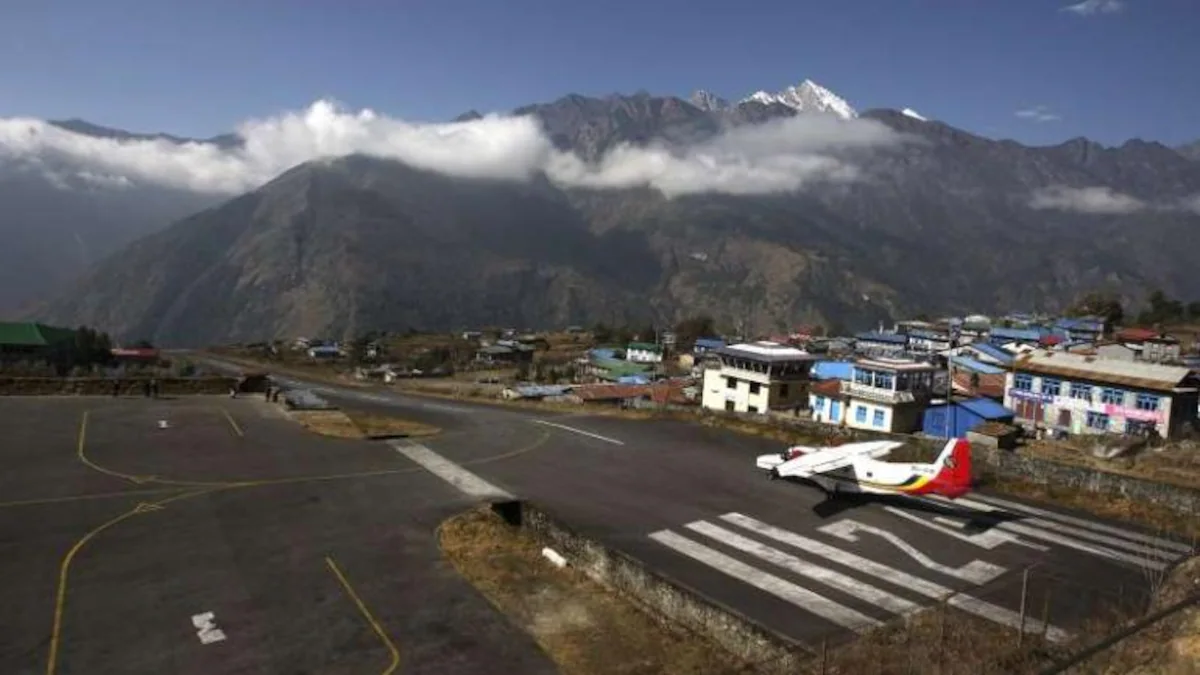
By Air + Road: Fly from Pokhara or Kathmandu to Jomsom Airport (JMO) — a 20–25 minute flight over the Himalayan barrier. From Jomsom, a driveable road (4WD required) now extends all the way to Lo Manthang (approximately 5–7 hours, depending on road conditions and stops).
By Road: Pokhara to Jomsom is also accessible by road via Beni and Tatopani — a full-day drive through progressively drying and dramatic Kali Gandaki valley scenery.
Restricted Area Permit: Upper Mustang (north of Kagbeni) requires a special Restricted Area Permit (RAP), currently costing USD 500 per person for the first 10 days, obtainable through licensed trekking agencies. Drone and filming permits require additional authorisation from the Department of Film Development.
- Lo Manthang (Walled City) — A perfectly preserved medieval Tibetan-style walled town at 3,840m. Ancient monasteries, royal palace ruins, whitewashed houses, and narrow lanes — an extraordinary living heritage site unlike anywhere else in Nepal.
- Ancient Cave Dwellings — Over 10,000 manmade caves carved into the cliffs of the Mustang canyons, some containing rare 55 14th–15th century Buddhist murals. Discovered only in 2007, these are among the most extraordinary archaeological filming destinations in Asia.
- Desert Landscape — The ochre, rust, and grey canyon landscapes of Mustang are visually closer to the American Southwest than the classic "green Nepal" — deeply unusual Himalayan cinematography.
- Muktinath Temple (3,710m) — A sacred Hindu and Buddhist pilgrimage site on the edge of the Trans-Himalayan plateau. Natural gas flames burning amid water make it one of Nepal's most visually striking temple sites.
- Tibetan Cultural Immersion — Festivals like Tiji (Lo Manthang, May) and Yartung (Muktinath, August) feature masked dances, traditional costumes, and horse racing in spectacular high-altitude settings.
- Mustange Alu & Thakali Cuisine — The famous Thakali khana-set and local Mustang apple products tell a compelling story of food culture at altitude.
Quick Facts
- Region
- Himalayan
Film here?
Our expert scouts can organize permits, logistics, and crew for this location.
Get in Touch arrow_forward